Candace Owens, Media Archetypes, and the Question of Identity: Why I Believe Something Changed

Over the years, I began noticing what I considered significant differences between earlier appearances and more recent appearances. Some people will dismiss these observations immediately. Others will find them intriguing. My goal is not to force anyone into my conclusions, but to document what I observed and why it led me to question broader assumptions about media, identity, and public figures.
The Visual Changes That Raised Questions
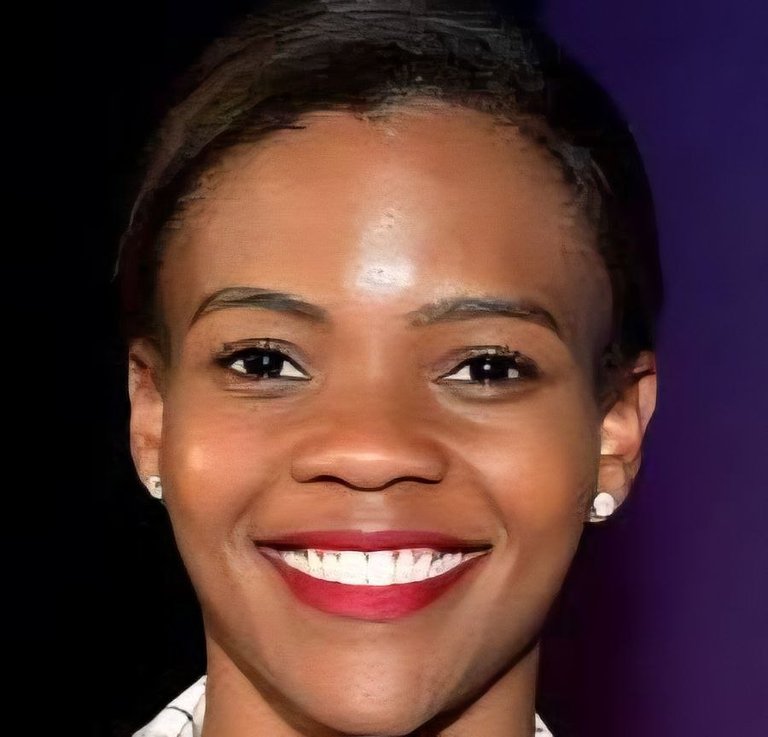
2019 image of Candace Owens

Candace Owens after 2019
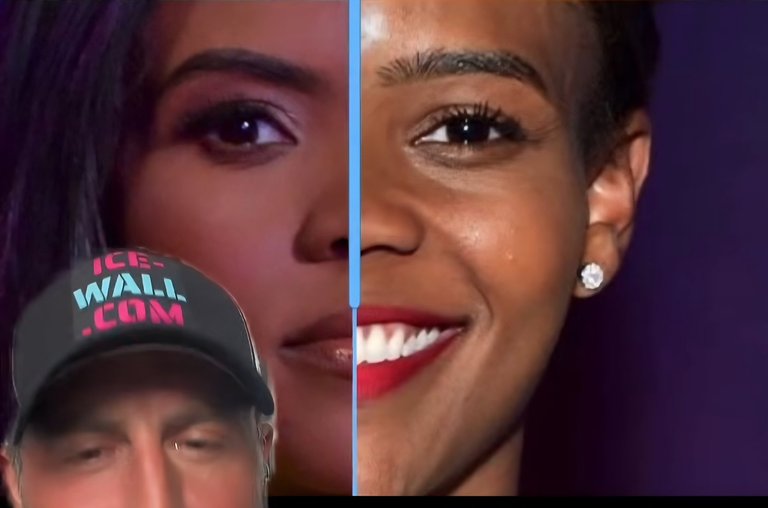
Candace Owens does not Symmetrically match with the Old Candace Owens prior to 2020. Credits to Tyler Hanson for pointing this fact out.
 Today's Candace Owens matchs with perfect symmetry to Lisa Left-eyed Lopes. Tyler Hanson is the source for this as he points this out.
Why Some Researchers Believe Public Figures Change
The images above are one of the reasons this topic continues to attract attention among independent researchers.
When people look at side-by-side comparisons, they often focus on specific features:
- facial proportions,
- Birthmarks (same locations)
- Blemishes (same locations)
- nose shape,
- jaw structure,
- eye spacing,
- cheekbone placement,
- smiles,
- facial expressions,
- and other markers they believe remain consistent throughout a person's life.
Supporters of replacement theories argue that some public figures appear so different across periods of time that ordinary explanations seem insufficient.
For me, the interesting question is not whether every replacement theory is true.
The more interesting question is why so many people have become convinced that modern public figures are not always what they appear to be.
That question points toward a larger issue.
Trust.
Modern institutions have spent decades losing public trust.
Governments lose trust.
Media organizations lose trust.
Corporations lose trust.
Experts lose trust.
As trust declines, people begin questioning assumptions that previous generations accepted without hesitation.
This creates an environment where alternative explanations flourish.
Some are reasonable.
Some are speculative.
Some are undoubtedly incorrect.
Yet they continue to emerge because confidence in official narratives continues to erode.
The Media Archetype Problem
One reason I find these discussions fascinating is because modern media often functions through archetypes rather than individuals.
Every generation seems to produce familiar characters.
The rebel.
The truth teller.
The outsider.
The establishment defender.
The revolutionary.
The conservative champion.
The progressive champion.
The celebrity activist.
The technological savior.
The public becomes emotionally invested in these roles.
The specific individual occupying the role often matters less than the role itself.
This is why media personalities become so powerful.
They are not simply people.
They become symbols.
Once a public figure becomes a symbol, audiences begin projecting hopes, fears, frustrations, and expectations onto them.
In many cases, the symbol becomes larger than the person.
That phenomenon is not unique to one political movement.
It exists across the political spectrum.
It exists within entertainment.
It exists within journalism.
It exists within religion.
It exists almost everywhere.
This is one reason I pay attention to archetypes.
The archetype often reveals more than the individual.
Candace Owens as a Modern Media Figure
Whether one agrees with Candace Owens or strongly disagrees with her, there is no denying that she occupies an important role within modern media.
She became a prominent voice within conservative circles.
She challenged mainstream narratives.
She attracted both passionate supporters and vocal critics.
She became a lightning rod for controversy.
That role matters.
Because media ecosystems often elevate individuals who can capture public attention and generate emotional engagement.
The result is a constant battle between competing narratives.
One side presents heroes.
The other side presents villains.
Then the roles reverse depending on the audience.
The public is encouraged to choose sides.
The public is encouraged to identify with personalities.
The public is encouraged to defend its champions.
Meanwhile, larger questions often receive less attention.
Questions about power.
Questions about institutions.
Questions about influence.
Questions about who benefits from division.
📜 The Enochic Worldview and the Question of Power
My own perspective is heavily influenced by ancient Jewish apocalyptic traditions.
The Enochic worldview presents reality as far more complex than modern materialism allows.
The ancient writers did not see nations as merely political structures.
They did not view rulers as merely administrators.
They did not believe history unfolded exclusively through human decisions.
Instead, they understood earthly events as reflections of larger spiritual realities.
The Book of Enoch describes rebellion among heavenly beings.
The Hebrew Scriptures contain traditions concerning the nations and their relationship to heavenly powers.
Daniel speaks about spiritual princes connected with kingdoms.
Revelation describes cosmic conflict occurring alongside earthly events.
Whether one interprets these passages literally or symbolically, they reveal something important.
Ancient people believed that what happens on earth cannot always be understood by looking at earth alone.
There were deeper forces involved.
That perspective continues to influence how I view modern events.
The Rebellion of the Watchers
The Enochic tradition expands upon Genesis 6:1–4:
«"The sons of God saw the daughters of men that they were fair; and they took wives of all whom they chose."
(Genesis 6:2)»
The Book of Enoch identifies these "sons of God" as the Watchers.
1 Enoch 6:2–3 states:
«"And the angels, the children of heaven, saw and lusted after them, and said to one another: Come, let us choose wives from among the children of men and beget children."»
The leader of these Watchers is identified as Samyaza (Semjaza), who swears an oath with the others on Mount Hermon.
According to 1 Enoch 8, these beings introduced forbidden knowledge to humanity:
«"Azazel taught men to make swords, knives, shields and breastplates."
(1 Enoch 8:1)»
Other Watchers taught:
- enchantments,
- astrology,
- celestial mysteries,
- sorcery,
- metalworking,
- and various hidden arts.
The result was not enlightenment but corruption.
Violence increased.
Humanity became corrupted.
Civilization accelerated technologically while simultaneously descending morally.
Whether one interprets this literally or symbolically, the Enochic worldview clearly links spiritual rebellion with corruption spreading through human civilization.
The Nations and Their Heavenly Rulers
The Hebrew Scriptures contain another remarkable concept.
The nations are not portrayed as existing independently of heavenly powers.
One of the most important texts appears in Deuteronomy 32:8–9.
The Dead Sea Scrolls and Septuagint preserve the reading:
«"When the Most High divided the nations,
when He separated the sons of Adam,
He fixed the borders of the peoples
according to the number of the sons of God.
But יהוה's portion is His people,
Jacob His allotted inheritance."»
(Deuteronomy 32:8–9)
Notice what the text implies.
The nations are divided.
The nations are allotted.
Israel belongs directly to יהוה.
The remaining nations are associated with the "sons of God."
This passage became foundational for later Divine Council traditions within Second Temple Judaism.
Daniel and the Princes of Nations
The Book of Daniel expands this concept even further.
When an angel finally reaches Daniel, he explains that he was delayed:
«"The prince of the kingdom of Persia withstood me twenty-one days; but Michael, one of the chief princes, came to help me."
(Daniel 10:13)»
Later he says:
«"Now I will return to fight against the prince of Persia; and when I go out, behold, the prince of Greece shall come."
(Daniel 10:20)»
These are clearly not ordinary human rulers.
Daniel presents spiritual powers operating behind earthly empires.
Persia has a prince.
Greece has a prince.
Israel has Michael:
«"Michael your prince."
(Daniel 10:21)»
Ancient Jewish readers did not view this language as merely political.
They understood nations as being connected to heavenly powers.
Revelation and Cosmic Conflict
The same worldview appears in the New Testament.
In Revelation 12 we read:
«"And there was war in heaven: Michael and his angels fought against the dragon; and the dragon fought and his angels."
(Revelation 12:7)»
The outcome is dramatic:
«"Neither was their place found any more in heaven."
(Revelation 12:8)»
Then:
«"The great dragon was cast out, that ancient serpent called the Devil and Satan, who deceives the whole world."
(Revelation 12:9)»
Notice that this conflict unfolds simultaneously with events occurring on earth.
The heavenly realm and earthly realm are connected.
The conflict above influences events below.
This is precisely the type of worldview found throughout apocalyptic literature.
Why This Matters
Whether one accepts these traditions literally, symbolically, or somewhere in between, they reveal an undeniable fact:
Ancient Jewish thought was profoundly supernatural.
The biblical authors and Second Temple writers believed:
- heavenly powers existed,
- nations could be influenced by spiritual rulers,
- earthly kingdoms reflected heavenly realities,
- spiritual rebellion affected human civilization,
- and history involved both visible and invisible actors.
That perspective continues to influence how I view modern questions concerning power, media, influence, nations, and public narratives.
⚔️ The Problem of Manufactured Division
One of my greatest concerns is not any particular politician, celebrity, or commentator.
My concern is division itself.
Modern media thrives on conflict.
It profits from outrage.
It rewards tribalism.
It encourages people to see one another as enemies.
Every day audiences are encouraged to pick teams.
The left versus the right.
The establishment versus the outsider.
The mainstream versus the alternative.
The result is often confusion rather than clarity.
People become so focused on defending personalities that they stop questioning the systems surrounding those personalities.
That is why I believe the deeper issue is not any single public figure.
The deeper issue is the environment that constantly produces competing narratives while encouraging audiences to become emotionally attached to them.
Interestingly, this concern is not entirely foreign to ancient Jewish thought.
The prophets repeatedly warned Israel not to place ultimate trust in princes, rulers, or earthly power structures.
Psalm 146:3 states:
«"Put not your trust in princes, nor in the son of man, in whom there is no salvation."»
Likewise Jeremiah warns:
«"Cursed is the man who trusts in man and makes flesh his strength."
(Jeremiah 17:5)»
The concern is not political participation itself.
The concern is misplaced trust.
Throughout history populations have repeatedly attached themselves to leaders, movements, empires, and ideologies while neglecting deeper questions concerning truth, righteousness, and allegiance to the Eternal.
This is one reason I remain cautious whenever any media figure is elevated into a cultural hero.
History repeatedly demonstrates how quickly personalities can become symbols and symbols can become objects of devotion.
🧩 My Personal Conclusion
I am not asking anyone to accept my conclusions.
I am encouraging readers to investigate for themselves.
Study the images.
Study the history.
Study the media systems.
Study the archetypes.
Study the ancient worldview.
Compare the evidence.
Draw your own conclusions.
For me, the most important lesson is that modern society places enormous attention on personalities while paying far less attention to the structures operating behind them.
Whether one views these questions through politics, media studies, theology, or ancient apocalyptic traditions, the same principle applies:
Look beyond the individual.
Look beyond the headline.
Look beyond the narrative.
Ask who benefits.
Ask why certain stories dominate public attention.
Ask why the same archetypes appear again and again.
Most importantly, think for yourself.
Because regardless of where one ultimately lands on these questions, independent thought remains far more valuable than blind allegiance to any public figure.
As Proverbs reminds us:
«"The simple believes everything,
but the prudent gives thought to his steps."
(Proverbs 14:15)»
And as the Book of Enoch repeatedly urges its readers, wisdom belongs to those who seek understanding rather than blindly following the crowd.
That does not mean accepting every alternative theory.
It means being willing to examine claims carefully, test assumptions honestly, and pursue truth wherever the evidence ultimately leads.
Congratulations @greywarden100!
You raised your level and are now a Dolphin!
Check out our last posts: