Pencil madness
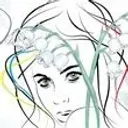

Only a test of charcoal pencil.
My charcoal drawing feels intimate and exploratory, as if it captures fragments of observation rather than a single finished statement. The central focus is a carefully rendered eye near the top of the page. Its lashes are thick and expressive, and the surrounding shading suggests depth, fatigue, or contemplation. The eye appears alert yet inward-looking, giving the impression of quiet thought or restrained emotion. The charcoal marks around it are loose and textured, allowing the paper to remain visible and active in the composition.
On the right side, partial facial contours emerge—suggestions of a cheek, jawline, and mouth—drawn with rough, searching strokes. These areas feel deliberately unfinished, emphasizing gesture over precision and creating a sense of movement, as if the face is forming or dissolving at the same time. The smudging and layered lines give the drawing a tactile, almost weathered quality.
In contrast, the lower-left area introduces a delicate ornamental element: a small sunflower with curling, decorative lines. This motif feels lighter and more controlled, offering a visual pause from the emotional weight of the facial studies. The flower’s presence adds a symbolic note—perhaps growth, memory, or resilience—balancing the heavier tones of the portrait fragments.
The visible tools—a pencil and sharpener—frame the drawing as part of an ongoing process rather than a concluded piece. Overall, the work conveys introspection and vulnerability. It embraces imperfection, using charcoal’s softness and unpredictability to express emotion, thought, and the act of seeing itself.
Nice drawing!
Thank you!
Words shape reality long before they describe it.
Some words stay with us longer than experiences themselves.
Words can clarify, but they can also conceal.
In choosing words, we reveal more than intention.
Words carry weight even when spoken lightly.
Silence gives words their meaning.
Words can heal slowly or wound instantly.
The right words arrive when we stop forcing them.
Words remember what we try to forget.
Meaning changes when words are repeated too often.
Words travel farther than actions sometimes can.
Words require responsibility once released.
In words, thought becomes visible.
Words fail, yet we depend on them.
Words create bridges where understanding might otherwise collapse.